Honda’s Smallest Electric Car N-One e
Honda’s Smallest Electric Car N-One e: Revealed – Will It Come to India?
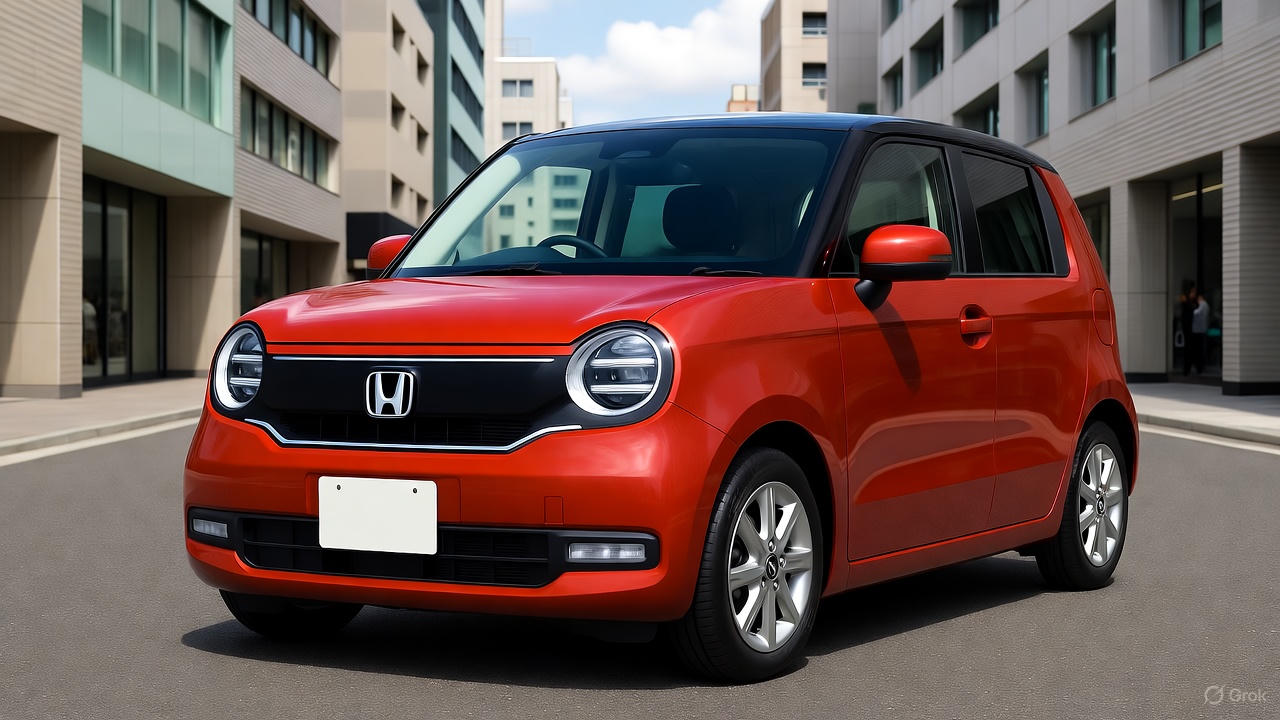
Honda’s Smallest Electric Car N-One e: Honda has finally unveiled its cutest electric car yet — the Honda N-One e:. This small, boxy EV is already winning hearts in Japan for its adorable looks, compact design, and smart features. If you loved the retro Honda e, this feels like its more practical and affordable sibling. But the big question is: will it come to India? Let’s take a closer look.
A Compact EV Built for City Life
The Honda N-One e: is designed with city driving in mind. At less than 3.4 meters in length, it’s easy to park, nimble to handle, and perfect for weaving through tight traffic. The tall, upright stance gives it that signature Japanese kei car charm, while small wheels ensure quick turns even on narrow streets.
I think this is a great option for anyone who wants a small, fun, and eco-friendly car for daily commuting. It’s got that same effortless vibe you get from a Maruti Alto or a Tata Punch EV, but with a much quirkier personality.
Cool and Minimal Design
Honda has kept things simple yet stylish. The N-One e: sports a retro front fascia with circular LED headlights, a flat nose, and a smooth rear with Honda branding across the tailgate. It feels like a modern take on old-school Japanese city cars — cute but with purpose.
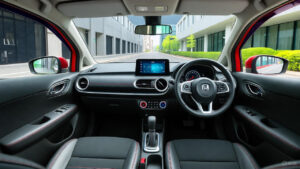
Inside, the layout is clean and practical. You get real buttons (finally!), a traditional volume knob, and clever storage shelves under the infotainment screen. There’s no bulky center console, which means you can slide across seats easily — handy when parking in tight spots.
Battery, Range, and Performance
Honda hasn’t revealed the full specs yet, but reports suggest it will borrow the same setup as the N-Van e:, offering around 245 km of range on a single charge. It supports fast charging, reaching 80% in about 30 minutes, which is impressive for a small car.
Since it’s smaller and lighter than most electric hatchbacks, you can expect slightly better real-world mileage too. Perfect for your daily city runs without worrying about range anxiety.
Smart and Useful Features
The N-One e: comes with a V2L (Vehicle-to-Load) system — meaning you can use the car’s battery to power your gadgets or even household devices during an outage. Imagine charging your laptop or powering a mini fan straight from your car!
It also supports one-pedal driving, where you accelerate and decelerate using just one pedal — super convenient in stop-go traffic. Plus, foldable rear seats offer flexible storage for luggage or groceries.
Launch Timeline and Global Availability
Honda will launch the N-One e: in Japan in September 2025, followed by its European debut at the IAA Munich Show. It won’t be heading to the US, but markets like the UK and other Asian regions are likely next in line.
Will the N-One e: Come to India?
As much as Indian EV fans would love to see this adorable car on local roads, Honda currently has no plans to launch the N-One e: in India. Instead, the company is focusing on developing a new electric SUV for 2026, along with hybrid models aimed at the mass market.
Still, the N-One e: feels like the perfect fit for India’s urban crowd — compact, affordable, and efficient. If Honda ever brings it here, it could easily become the “electric Alto” everyone’s been waiting for.
FAQs
Q: What is the range of the Honda N-One e:?
A: The N-One e: is expected to deliver around 245 km on a single charge, similar to the Honda N-Van e:.
Q: When will the Honda N-One e: launch?
A: It will launch in Japan in September 2025 and later appear in European markets.
Q: Will the Honda N-One e: come to India?
A: Not for now. Honda is focusing on its upcoming electric SUV and hybrid models for the Indian market.
Q: Does the N-One e: support fast charging?
A: Yes, it can fast charge up to 80% in around 30 minutes.
Q: What is the V2L feature in the N-One e:?
A: V2L (Vehicle-to-Load) allows the car to power gadgets and small appliances using its battery.

Founder of Sias Trend, covers India’s fast-growing mobile and automobile industries. With hands-on experience in digital ventures and tech trends, he shares insights on smartphones, electric vehicles, and the innovations driving India’s future in mobility and connectivity.